
 DDN, distributed in several markets through renowned system integrator MediaPower, is the one of the world's leading data intelligence platforms, helping organizations accelerate massive datasets for real-time insights.
They offer data management solutions that enhance innovation, cost efficiency, operational performance, and security across various industries.
DDN serves a wide range of industries including financial services, healthcare and life sciences, automotive and manufacturing, higher education, media and entertainment, energy, and telecommunications.
These sectors rely on DDN's cutting-edge data management solutions for enhanced innovation and operational efficiency.
DDN recently added to their knowledge base an intgeresting document, “A 5-Step Guide to Scalable AI Infrastructure and Data Intelligence”.
Here a brief summary of the contents.
The document outlines a structured, five-step framework for building scalable AI infrastructure, positioning data intelligence as the central enabler of modern artificial intelligence systems.
At a strategic level, the text argues that AI is no longer an experimental domain but a foundational capability for enterprises, governments, and research institutions.
The main constraint is not ambition, but infrastructure.
Traditional storage models, designed for batch processing and linear workflows, cannot sustain the scale, speed, and heterogeneity of AI-driven environments.
Data is generated continuously across distributed systems, from edge devices to cloud-native applications, requiring platforms that can manage, access, and operationalize it in real time.
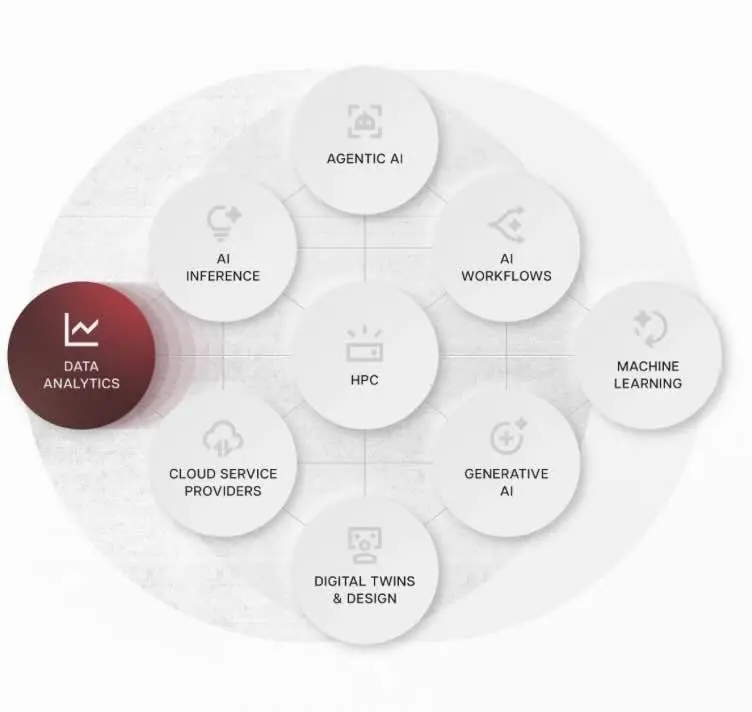
The first step focuses on establishing a scalable foundation based on High-Performance Computing.
HPC environments historically handle extreme workloads such as climate modeling, genomics, and large-scale simulations, making them a natural entry point for AI.
These systems introduce critical architectural principles, including high-throughput data pipelines, tight coupling between compute and storage, and resilience mechanisms such as fault tolerance and checkpointing.
Beyond performance, HPC builds operational discipline around managing concurrency, data movement, and continuous I/O pressure.
Organizations that mature in this context are better prepared to scale AI workloads without redesigning their infrastructure from scratch.
 The second step addresses the growing complexity of AI data.
 The second step addresses the growing complexity of AI data.
Unlike traditional datasets, AI data is highly heterogeneous, often unstructured, and enriched with metadata that defines its usability across different stages of the pipeline.
Data originates from multiple sources, including sensors, applications, and user interactions, and flows across hybrid environments spanning edge, core, and cloud.
The lifecycle is iterative and non-linear: data is ingested, filtered, labeled, transformed, and reused multiple times.
In this context, metadata becomes a primary organizational layer, enabling real-time search, indexing, and orchestration.
Infrastructure must therefore support high concurrency, dynamic tagging, and multi-tenant access without performance degradation.
The challenge shifts from storage capacity to data intelligence, defined as the ability to understand, locate, and activate data efficiently.
The third step focuses on operationalizing AI.
As projects move beyond experimentation into production, requirements expand to include governance, security, cost control, and compliance.
Multiple stakeholders interact with the same datasets, including data scientists, developers, and regulatory functions, each with different access and performance needs.
This creates a need for fine-grained control over data access, lineage, and usage.
Modern AI infrastructure must embed governance at the architectural level, enabling policy enforcement, service-level differentiation, and real-time observability.
Multi-tenancy becomes a core capability, allowing different workloads to coexist on shared infrastructure while maintaining isolation and compliance.
At this stage, scaling AI is less about raw performance and more about coordinating processes, users, and policies within a unified operational model.
The fourth step examines real-time inference, which becomes the dominant workload once models are deployed.
 The fourth step examines real-time inference, which becomes the dominant workload once models are deployed.
Unlike training, which is batch-oriented, inference must deliver immediate responses to unpredictable inputs.
Applications include fraud detection, conversational systems, and clinical decision support, all requiring low latency and continuous availability.
This demand is further amplified by architectures such as Retrieval-Augmented Generation, where models dynamically retrieve external data before generating outputs.
RAG introduces new infrastructure requirements: the ability to handle massive volumes of small, metadata-rich files, perform real-time indexing and search, and deliver sub-millisecond access to relevant information.
Storage systems evolve into active data platforms, capable of triggering workflows and streaming contextual data directly into inference pipelines.
The fifth and final step is the unification of AI workloads.
Maintaining separate infrastructures for training, inference, and analytics leads to inefficiencies, including data duplication, fragmented governance, and operational complexity.
The proposed solution is a unified data intelligence platform that supports all stages of the AI lifecycle within a single architecture.
Such a platform must be hardware-agnostic and adaptable across data centers, cloud environments, and edge deployments.
It must handle all data types and provide consistent access through file, object, and query interfaces.
Unification simplifies operations, enhances collaboration across teams, and accelerates the transition from raw data to actionable insights.
In this model, the data layer becomes an active, shared resource that supports continuous iteration and deployment.
The document also highlights real-world applications across multiple sectors.
In financial services, unified platforms enable ultra-low latency processing for trading and fraud detection.
In healthcare and life sciences, they support large-scale genomic analysis and clinical data processing.
Manufacturing environments use them for predictive maintenance and quality control at the edge, while public sector organizations rely on them for intelligence and security operations.
The common factor is the ability to manage diverse workloads and datasets within a single, scalable infrastructure.
Looking forward, the text emphasizes the need for future-proofing AI systems.
As models grow in size and complexity, and as inference shifts closer to end users and devices, infrastructure must remain flexible and adaptable.
This includes support for hybrid and distributed environments, increased automation, and deeper integration with cloud-native ecosystems.
Regulatory requirements are also expected to intensify, reinforcing the need for built-in governance and transparency.
The overarching conclusion is that the success of AI initiatives depends less on algorithms and more on data management capabilities.
Organizations that can unify, govern, and operationalize their data at scale are better positioned to extract value from AI.
Data intelligence is therefore identified as the key differentiator, transforming infrastructure from a passive storage layer into an active, strategic asset that underpins the entire AI lifecycle.
Synopsis
A five-step framework defines how organizations evolve toward scalable AI infrastructure, starting from High-Performance Computing foundations and progressing through data complexity management, workflow governance, real-time inference, and full platform unification.
The model positions data intelligence as the central capability, enabling consistent access, control, and activation of data across distributed environments.
The integration of training, inference, and analytics into a single architecture reduces operational fragmentation and supports real-time, low-latency AI applications, including those based on Retrieval-Augmented Generation.
Use cases across finance, healthcare, manufacturing, and public sector contexts confirm the effectiveness of unified platforms in handling heterogeneous workloads and large-scale datasets.
The long-term perspective highlights adaptability, automation, and hybrid deployment as essential requirements for sustaining AI growth.
#AI, #DataIntelligence, #HPC, #AIInfrastructure, #MachineLearning, #RAG, #CloudComputing, #EdgeComputing, #DataManagement, #digitalproduction
 INFO: https://www.ddn.com
INFO: https://media-power.it
